News and Updates

Consortium progress and scientific advances discussed at third annual meeting

2013 group photoClick to enlarge.

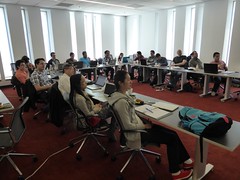
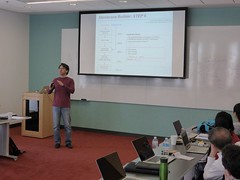
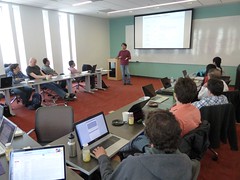
For the third year in a row, the Membrane Protein Structural Dynamics Consortium (MPSDC) hosted a number of events in its home base of Chicago during the month of May, key among these its third annual meeting. Unlike last year’s Frontiers in Membrane Protein Structural Dynamics conference, this year’s annual meeting was closed to the public, although there are plans to host a second open attendance conference in the near future.

Core workshops and minisymposium

As in previous years, the MPSDC’s Computational Modeling Core hosted a membrane protein modeling workshop, and a mini-symposium concerning the latest advances in computational approaches to the study of membrane proteins. As before, the modeling workshop provided attendants with an overview of the use of the modeling dynamics and visualization software NAMD and VMD, and also featured Dr. Wonpil Im’s CHARMM-GUI Ligand Binder module. This year’s mini-symposium covered a number of topics including force field and atomic models, structural modeling with low-resolution data, and transition pathways. The minisymposium hosted a “keynote” lecture of sorts on 2D-IR Spectroscopy, held by Josh Carr from the University of Wisconson-Madison. We are pleased to present you with a recording of Carr’s lecture, titled Connecting Experiment and Simulation by Modeling the Protein Amide I Band.

This year, the Consortium’s Membrane Protein Expression/Purification Core held its first workshop as well. This workshop featured several Consortium collaborators such as Edith Buchinger from Goethe University, Stephen Pless and Lilie Leisle from the University of Iowa, and Andrzej Rajca from the University of Nebraska. Topics discussed at this workshop included cellular and cell-free production of membrane proteins, reconstitution, incorporation of unnatural amino acids, single antigen binder technologies, and chemistry of protein modification and nitroxide spin labels. Both workshops and minisymposium were well attended and productive, and we will continue to host such satellite events in the future.

Annual meeting

The MPSDC’s annual meeting allows for Consortium PI’s to present on the latest advances in the respective cores and projects, and serves as a dedicated time and space for members to discuss their research and organically find ways to collaborate with colleagues. Moreover, it gives the executive arm of the MPSDC the opportunity to report on “the state of the Consortium.”

At this year’s annual meeting at the University of Chicago’s Gleacher Center, MPSDC director Eduardo Perozo highlighted the continual exchange of ideas within and dynamics of the Consortium itself. Focusing specifically on the activities of the past year’s accomplishments, Dr. Perozo discussed the rational and efficient consolidation of Core Facilities to their highest efficiency and optimal productivity in close collaboration with individual projects. For example, the Computational Modeling core is starting to provide a number of services and home-developed algorithms to the community at large, from quick force field parameterization of small molecules (and potential membrane protein ligands) to the conformational energetics biophysical probes, to important tools to the use and interpretation of long range distances and distance distributions from DEER experiments. Additionally, Dr. Perozo reported on the status of the Consortium’s unique bridging and pilot projects. Four of our bridging projects are currently in full swing, and one of the pilot projects has successfully transitioned to bridging project status. We have also incorporated two exciting new Pilot projects that bring new systems and new techniques to the Consortium.

Followed by Dr. Perozo’s framing discussion, the PI’s of each of the three cores and seven projects described the progress made and latest scientific findings in their respective teams, providing attendees with the opportunity to respond and provide helpful feedback. The cores are designed to act as “innovation incubators” and research support centers by providing service and expertise in these critical areas: Membrane protein expression, the establishment of chemical synthesis capabilities for probes and detergents, the generation of a variety of binders and other crystallization chaperones and other target binders and the development of common computational tools to interpret and integrate the wealth of experimental data. Each of these feed and interconnect with individual projects in a highly interactive way.

The Consortium’s projects are integrated as research efforts that tie together or enhance the contribution of the independent work and expertise of the participating investigator to the Consortium and expand the independent work in new directions. Ten talks in all, each of the PI’s of the MPSDC’s cores and projects presented on the very latest activities, which will soon be disseminated to the public in the form of publications and resources.

On the second day of the annual meeting, we featured presentations from a number of our associate members. Associate members are junior faculty members who are pursuing exciting and innovative research parallel to the Consortium’s mission, and have therefore been given access to the interactions and core resources of the Consortium in a budget-neutral way.

Several of our associate members have gone on to participate full-fledged in the Consortium’s activities, either by way of participating in existing projects (such as Wonpil Im with the Computational Modeling Core or Chris Ahern with the Membrane Protein Expression/Purification Core) or by starting new pilot projects. Both Olga Boudker and Ming Zhou started as associated members, and after presenting on their research at last year’s conference have gone on to spearhead new and promising pilot projects.

Along these lines, we invited several of our associate members to present talks, in order to foster further cross-pollination between our research and theirs. This year, Luis Cuello from Texas Tech University presented on inactiviation gating at the K+ channel selectivity filter, Katherine Henzler-Wildman from Washington University presented on the mechanism of multi drug efflux by EmrE, Jens Meiler from Vanderbilt University presented on membrane protein structure & dynamics from limited experimental data, and Robert Keenan from the University of Chicago gave a talk on tail-anchored membrane protein insertion at the ER. In addition to Andrzej Rajca who participated in the Membrane Protein Production core workshop and other associate members like Francis Valiyaveetil, all of them bring state of the art expertise in different areas such as synthetic chemistry and chemical biology, and are expected to actively participate in several of the Consortium’s activities.

In sum, we are thrilled to report that the Consortium is thriving, from both a strictly scientific stand point as well as in regards to our output to the community. We’d like to thank all who attended and partook in this year’s discussions, and look forward to seeing you next year!

Below are several photos of the annual meeting and satellite events. You can either browse through the photos here or visit the set on Flickr.

Collaborative MPSDC team develops innovative computational simulation technique

With our 2013 annual meeting less than a month away, we are delighted to share with you the news about a new computational simulation technique developed by several MPSDC team members that was first presented at last year’s Frontiers in Membrane Protein Dynamics conference. The development of this technique speaks to the significant scientific collaborations that take place under the umbrella of the Consortium, as well as the scientific conversations that began in Chicago last year.

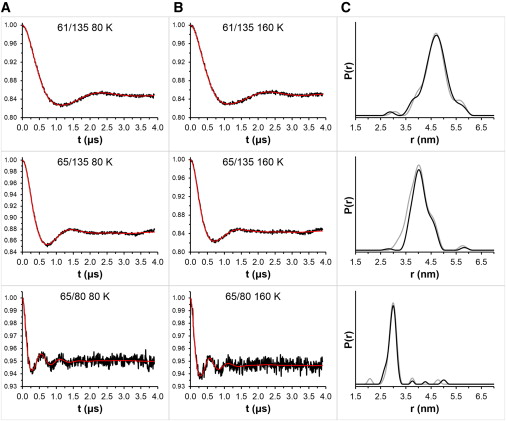
At the conference, Benoît Roux from our Computational Modeling Core introduced his team’s findings obtained from DEER (Double Electron-Electronic Resonance) data. At the conference, Roux and his team received helpful feedback from a number of scholars affiliated with the MPSDC as well as external invitees. After the conference, Roux and his team collaborated with a number of other scientists, including consortium colleague Hassane Mchaourab, to develop a novel computational simulation technique for exploiting the information from distance distribution data obtained from ESR/DEER spectroscopy for the refinement of membrane protein structures. This simulation technique, called the Restrained-Ensemble Molecular Dynamics (REMD) simulation method, uses a global ensemble-based energy restraint to force the spin-spin distance distribution histograms calculated from a multiple-copy molecular dynamics simulation to match those obtained from ESR/DEER experiments.

Already, the method has yielded three unique publications detailing the results of these experiments:

  • Islam, S. M.; Stein, R.; Mchaourab, H.; Roux, B. Structural Refinement from Restrained-Ensemble Simulations Based on EPR/DEER Data: Application to T4 Lysozyme, J. Phys. Chem. B 117(17): 4740-54, 2013. (link)
  • Roux, B.; Islam, S. M. Restrained-Ensemble Molecular Dynamics Simulations Based on Histograms from Double Electron-Electron Resonance Spectroscopy, J. Phys. Chem. B 117(17): 4733-9, 2013, In Press. (link)
  • Roux, B.; Weare, J. On the statistical equivalence of restrained-ensemble simulations with the maximum entropy method, J. Chem. Phys. 138(8): 084107, 2013. (link)

The article co-authored by Benoît Roux and Jeane Weare was highlighted by the Journal of Chemical Physics on their Top 20 Most Read in March 2013.

Roux and his team have also gone on to apply this method to VSD (voltage-sensing domain) data with Eduardo Perozo, and Glt(Ph) data with Olga Boudker. Additionally, Wonpil Im is also implementing an easy setup of this method with dummy spin-labels on his CHARMM-GUI generator.

Shahidul M. Islam from Roux’s team, who co-authored two of the above papers and has been deeply involved in the scientific process, provided the MPSDC with an overview of the technique and its utility. We invite you to read his overview here »

Congratulations to all involved in the development of this exciting and important new method!

Benoît Roux receives Great Lakes Consortium award access to Blue Waters supercomputer

The Great Lakes Consortium for Petascale Computation has awarded access to the Blue Waters supercomputer — which is capable of performing quadrillions of calculations every second and of working with quadrillions of bytes of data — to 10 diverse science and engineering projects, including a project titled “The mechanism of the sarco/endoplasmic reticulum ATP-driven calcium pump”, spearheaded by Benoît Roux and his team.

Blue Waters supercomputer. Click to enlarge.

The Great Lakes Consortium for Petascale Computation is a collaboration among colleges, universities, national research laboratories, and other educational institutions that facilitates the widespread and effective use of petascale computing. The computing and data capabilities of Blue Waters will assist researchers in addressing questions of biology, nanoelectronics, ecological and economic impacts of climate change, and more.

Roux’s work with the Blue Waters supercomputer will make a significant contribution to the Conformational Transitions in P-class ATPases Project of the Membrane Protein Structural Dynamics Consortium (MPSDC), in which Roux collaborates with Francisco Bezanilla. Roux’s team provided the following description of their research plans with Blue Waters:

Maintaining optimum concentration gradients of monovalent (Na+, K+) and divalent (Ca2+) ions across cell membranes is a crucial part of signaling and regulation of many biological processes. Positively charged ions, being impermeable to largely hydrophobic cell membranes, need special passages to travel in and out of the living cell. Nature’s answer to this problem is two classes of membrane proteins called ion channels and ion pumps. Ion channels are responsible for the passive transport of selected ions, while ion pumps consume ATP to transport ions against their gradient.

Understanding the detailed molecular mechanism of ion pumps has been a long standing problem. In the early parts of the previous decade, a major breakthrough came in the form of determination of atomic resolution X-ray crystal structures of calcium transporting pump of sarcoplasmic reticulum of skeletal muscles (SERCA) that uses ATP hydrolysis as a source of free energy. Detailed structural studies of the pump under different conditions provided analogues of various intermediates in the reaction cycle and revealed important changes in the tertiary structure of the protein both in the cytoplasmic and in the transmembrane parts. Two major outstanding issues are the pathways of the ions to and from the transmembrane binding sites and a detailed understanding of the large scale conformational changes among various functionally relevant states. We will apply all-atom molecular dynamics (MD) and string method with swarms-of-trajectories to study transition pathways among various experimental structures.

The allocations provided on the Blue Waters supercomputer will allow us to study this important membrane protein with unprecedented detail. This study will reveal the molecular mechanism of an important step in the ion pumping process of a P-type ATPase and will provide a solid ground to understand other ATP-driven ion pumps such as the sodium-potassium pump, which shares very high sequence similarity with SERCA.

Congratulations to Benoît and his team for receiving this important award!

Learn more about the Blue Waters supercomputer »

New SNPS (Symmetric Nano-Positioning System) software made available

Proteins may undergo multiple conformational changes required for their function. One strategy used to estimate target site positions in unknown structural conformations involves single-pair resonance energy transfer (RET) distance measurements. However, interpretation of inter-residue distances is difficult when applied to 3D structural rearrangements, especially in homomeric systems. Probe diffusion further complicates this task by biasing measurements towards shorter distances. Lanthanide resonance energy transfer (LRET) is an ideal technique for simultaneously resolving multiple distances within a protein. Hyde et al. (2012) recently combined LRET with an ensemble of numerical methods to form the Symmetric Nano-Positioning System (SNPS), which allows accurate 3D positioning and inter-probe distance estimation in functional homomeric proteins.

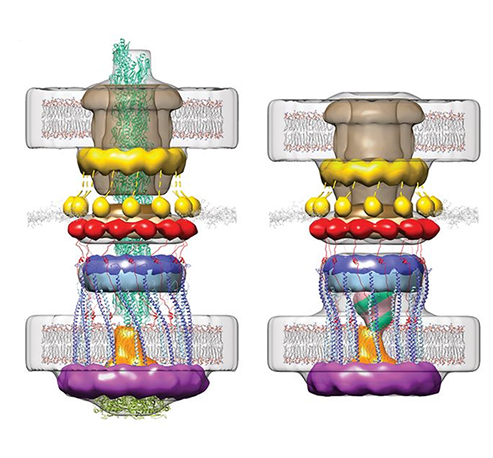
SNPS determines the 3D position of lanthanide donors [satellites] attached to a target site (one per subunit), relative to a single fluorescent acceptor [antenna] placed in a static reference site, as illustrated in the above figure. The acceptor’s position and accessible volume can be modeled from its structure-based labeling site by several methods, including dihedral scan analysis. SNPS can be applied to all defined conformational states of the protein and with simultaneous functional recordings. Satellite-to-antenna distances are encoded in time-resolved LRET lifetime decays. SNPS directly fits a 3D geometric model of satellite positions to LRET lifetime measurements using an inverse trilateration-based curve fitting procedure. Global analysis implementation fits the geometric model to an ensemble of replicate measurements. Numerical and analytical tools are integrated to account for probe diffusion and evaluate the confidence region of fitted positions. SNPS is well-suited to estimate 3D conformational changes at the target site between defined conformational states. In its first application, SNPS was used to determine the position of a functional voltage-gated potassium channel’s voltage sensor in its three major conformations [H. Clark Hyde, Walter Sandtner, Ernesto Vargas, Alper T. Dagcan, Janice L. Robertson, Benoit Roux, Ana M. Correa, Francisco Bezanilla (2012), Structure 20(10): 1629-1640].

The SNPS Toolbox contains the following stand-alone programs that implement the SNPS method:

  • SNPS: Performs inverse trilateration-based curve fitting of LRET lifetime decays to estimate the 3D position of lanthanide donors [satellites] attached to a target site (one per subunit), relative to a single fluorescent acceptor [antenna] placed in a static reference site. An acceptor file must be supplied by the user that specifies the acceptor’s coordinates and accessible volume. SNPS can alternatively fit all donor-acceptor distances constrained such that donors must lie in a polygon (symmetric) geometry, without any knowledge of acceptor position. SNPS can also simulate LRET lifetime decays at a user-defined donor position and noise level to explore the relation between donor position and decay shape. LRET lifetime decays are expected to be sensitized emission measured by a photomultiplier tube in analog mode (Poisson noise). The user imports lifetime decay files (ASCII .txt) and an acceptor file (ASCII .txt or Matlab .mat). See the “Example Data” folder for examples of required formatting. Fits are accompanied by a comprehensive set of output figures and a solution file.
  • DecayAnalysis: Performs model-free curve fitting of multi-exponential decays to estimate time constants and amplitudes (up to 4 exponential components). It is intended for donor-only time constant analysis of LRET experiments, but can also be used for general exponential fitting. The donor-only time constant is a required parameter for the SNPS program. The user can place constraints on time constants and define a weights scheme appropriate for the measurement uncertainty (e.g., Poisson vs. Gaussian noise). A large set of measurements can be fit quickly with basic statistical analysis reported. The user imports lifetime decay files in ASCII (.txt) format. See the “Example Data” folder for examples of required formatting.

SNPS and Decay Analysis Screen Guides


Download the software (version 2012.1):
Windows 64-bit: SNPS_Toolbox_win64.exe
Windows 32-bit: SNPS_Toolbox_win32.exe

Installation: Clicking on the downloadable .exe file will directly launch the Matlab Component Runtime (MCR) installation process and extract the SNPS and DecayAnalysis applications. This is a one-time installation, after which both applications can be launched. Installation of the included MCR is required even if you currently have Matlab or other MCR versions installed. Regarding processing speed, CPU speed takes precedence over the number of cores. The extracted folder also contains an “Example Data” folder with example data from the publication: AgTx2[II]-D20C-BODIPY-FL-maleimide acceptor cloud and Shaker S4(4) LBT construct sensitized emission (SE) and donor-only (DO) lifetime decays. Fit progress and information is displayed in an accompanying DOS window. Output files are written to a subfolder of the imported data directory.

The software was developed and written by H. Clark Hyde from Francisco Bezanilla’s group at the University of Chicago. Please contact us with questions or suggestions using the comments form below.

MPSDC welcomes Wonpil Im and Chris Ahern!

MPSDC is pleased to welcome two new members to the team!

Chris Ahern, University of British Columbia. Click to enlarge.

Christ Ahern joins us from the University of British Columbia where he works as an associate professor in the Department of Anesthesiology, Pharmacology and Therapeutics.

Wonpil Im, The University of Kansas. Click to enlarge.

Wonpil Im will be working with the consortium from The University of Kansas, where he works as an associate professor in the Department of Molecular Biosciences.

We look forward to collaborating with both scientists. They bring unique skills to the consortium and are particularly well qualified to help advance our interdisciplinary research goals. Their contributions will help the consortium continue to gain momentum in our effort to elucidate the relationship between membrane protein structure, function and dynamics.

The next MPSDC annual meeting will be May 9-10, 2013. Save the date!

Save the date for the next annual meeting scheduled to be held May 9-10, 2013. The location will be here in Chicago, and the venue will be announced soon!

In May 2012 the Membrane Protein Structural Dynamics Consortium (MPSDC) held its first Frontiers in Membrane Protein Structural Dynamics conference at the Gleacher Center in Chicigao. This year our annual meeting will provide similar opportunities for group conversation and collaboration between participants. We hope you will join us!

Participants gathered on the stairs at the Gleacher Center for a group photo.

First Frontiers in Membrane Protein Structural Dynamics Conference was a success


Dorothee Kern, Brandeis University and External Advisory Committee Member

On May 3rd and 4th, the Membrane Protein Structural Dynamics Consortium (MPSDC) held its first Frontiers in Membrane Protein Structural Dynamics conference. The conference consisted of scientific sessions and poster presentations, and featured both Consortium members and external invitees. Attendance was open to the public took place within the context of our 3rd Annual MPSDC Meeting, where all members, NIH representatives and our External Advisory Committee participated. Prior to the conference, the MPSDC’s Computational Modeling Core hosted a NAMD/VMD workshop and a mini-symposium concerning the latest advances in membrane protein modeling.


Miguel Holmgren, NINDS and collaborator in Bridge 1: Conformational Transitions in P-class ATPases

Both the conference and CMC events were very well attended and enabled extensive conversations surrounding the topic of cutting edge advances and scientific methods in the field of membrane protein dynamics, as well as ways to resolve current roadblocks. The conference was able to hit a high note in bringing together the issues and ideas most relevant to the key goals of the consortium both in the present and in the future. Chris Ahern of the University of British Columbia and MPSDC Associate Member noted afterwards that it was probably one of the best meetings he’s been to, “primarily because of the quality of the science that’s being done, as well as the excitement and eagerness of people to cooperate.”


José Faraldo-Gómez, Max Planck Institute for Biophysics and MPSDC Associate Member

In the afternoon, two discussion panels were held, which themselves are in the spirit of much of the broader conversations that took place at the conference as a whole. The first panel, “Finding a common language: linking experiment and computation” was chaired by Hassane Mchaourab, and included Benoît Roux, Martin Zanni, Ivet Bahar, Dorothee Kern, and Emad Tajkhorshid as participants.


Chris Ahern, University of British Columbia and MPSDC Associate Member

The second panel was titled “Breaking the barriers of membrane protein expression and labeling” and was moderated by Robert Nakamoto. The panel included Chris Ahern, Jim Bowie, Volker Dötsch and Shohei Koide. Discussion focused on three topics: the optimal nitroxide spin probe for monitoring protein dynamics and DEER distance measurements, how to incorporate such a probe into the protein targets, and cell free synthesis of target proteins. The optimal nitroxide spin probe would be connected to the backbone by only a β carbon. Such a label can be introduced using chemical synthesis, but because most of our proteins are too large, methods for bio-incorporation of unnatural amino acid are preferred. Cell free biosynthesis systems such as those developed in the laboratory of Volker Dötsch, Goethe University, and Chris Ahern, University of British Columbia, may provide the best approaches. The Protein Core labs will explore methods for charging the non-sense tRNA by evolved tRNA synthetases or a ribozyme using technologies called the Flexizyme developed by Soga and co-workers at Tokyo University. The acylated TAG tRNA charged with the spin probe is simply added to the cell free synthesis mix. Another issue is the lability of nitoxides to reduction by ascorbic acid. We will test a variety of nitroxide spin probes, which have been reported to be relatively insensitive to reduction. Finally, we discussed specific placement of labels using synthetic binders. In particular, the synthetic 10FN3 binders, or monobodies (~93 aa, derived from a type III fibronectin domain), can mediate specific labeling of a protein and effectively attach a label or cargo to the protein target with high affinity and stability.

We’d like to thank all who attended and partook in the discussions. By all accounts, it is hard to think of a better outcome for the conference and accompanying events, and we look forward to hosting another meeting in two years.

Below is a gallery displaying photos of the conference. You can either scroll through the photos here or visit the set on Flickr. We’ve also made available several brief audio interviews with attendees of the conference, to be found in the margins of the body of this post.

New Continuum-Molecular Dynamics (CTMD) software made available by Computational Modeling Core

The membrane environment is a key determinant of function and/or organization of membrane proteins. It is essential for the activities of the Consortium to have access to quantitative information about the characteristics and energetics of membrane-protein interactions. For multi-segment transmembrane proteins in particular, such characterization is complicated by the different hydrophobic thicknesses of the component transmembrane segments and the radially non-uniform hydrophobic interface created between the membrane and the protein. A hybrid Continuum-Molecular Dynamics (CTMD) approach to compute membrane deformations profiles around multi-segment proteins and corresponding energetics was recently published [Sayan Mondal, George Khelashvili, Jufang Shan, Olaf Andersen, Harel Weinstein (2011), Biophysical J (101): 2092-2101; link]. This stand-alone application implements the CTMD approach.

Protocol for the 3D-CTMD approach, illustrated for rhodopsin in a diC14:1PC lipid bilayer (Mondal et al., BJ 2011). Click to enlarge and learn more.

The CTMDapp software calculates the deformation profiles of the bilayer and the free energy cost of the membrane deformation around multi-segment transmembrane proteins, taking into account the radially non-uniform hydrophobic surface of the protein. As the primary input it requires a molecular dynamics trajectory of a multi-segment, transmembrane protein embedded in a bilayer.

To allow for calculations without a molecular dynamics input, the CTMDapp software also implements a simplified version of the CTMD method that can assess the radial asymmetry of the membrane-protein interface for a particular protein structure at an approximate level.

Methodological details can be found in the original paper (Mondal et al., BJ 2011). In addition, the application is documented with brief usage notes at every step and generates diagnostic intermediate output.

Download the software:

Instructions:
For the Windows version, clicking on the downloadable .exe file will directly launch the Matlab Component Runtime (MCR) installation process and extract the app executable. For the Mac version, the MCR must be installed first by opening MCRinstaller.dmg in the folder. This is a one-time installation, after which CTMDapp can be launched. The Unix version requires an interface like Xwin along with a script setting proper paths.

The software was written by Sayan Mondal (mos2013@med.cornell.edu) in the Harel Weinstein (haw2002@med.cornell.edu) lab at Weill Cornell Medical College, Cornell University. Please feel free to contact us with questions and suggestions about the software.

Frontiers in Membrane Protein Dynamics full schedule announced

Click to enlarge poster or download a pdf for 8×11″ printing.

The Membrane Protein Structural Dynamics Consortium (MPSDC) will be holding its first Frontiers in Membrane Protein Dynamics conference on Thursday, May 3rd and Friday, May 4th.

This conference consists of scientific sessions and poster presentations, and will feature both Consortium members and external invitees.

Attendance is open to the public and will take place within the context of our 3rd Annual MPSDC Meeting, where all members, NIH representatives and our External Advisory Committee will participate.

The MPSDC’s Computational Modeling Core will host a NAMD/VMD workshop and a mini-symposium prior to the conference, which will take place on the University of Chicago campus. For more information on either of these events, click here »

We are currently booked over capacity for the conference, and are therefore no longer taking registrations. Please inquire at mpsdc_admin@bsd.uchicago.edu if you have any questions.
Read more »

MPSDC-funded poster author wins Biophysical Society 2012 Student Research Achievement Award

Thomas Chew with the award-winning poster. Click to enlarge.

The MPSDC had a strong showing at the Biophysical Society’s 56th Annual Meeting this year, with members collaborating in a total of 72 posters and presentations taking place in various subgroups, platforms, symposia, mini-symposia, and workshops. Now, we are proud to announce that one of our posters was selected as one of the thirteen 2012 Student Research Achievement Award Winners.

Thomas Chew, the first author of the poster, is an undergraduate student at the University of California, San Diego. He has performed summer research projects in the laboratory of Merritt Maduke at Stanford University.

The winning poster is entitled Structural Investigations of CLC-ec1, A Large Integral Membrane Protein, Using Solution-State NMR and Nanodisc Techology and features Thomas Chew, Sherwin J. Abraham, Shelley M. Elvington, and Merritt Maduke as authors. The poster was selected by the National Institute of General Medical Sciences as the sole NIGMS Poster Winner.

Thomas Chew at the February 27 Awards Ceremony together with the other winners and Steve Block. Click to enlarge.

Thomas was recognized and received a monetary award at the Awards Ceremony on February 27, preceding the 2012 National Lecture delivered by Steve Block. He was also selected to attend the NIGMS/NIH’s 50th anniversary symposium in October 2012.

Congratulations, Thomas and Merritt!

Read the Biophysical Society’s press release »